A 600 BC book quoting a 1611 Bible
UnrefutedNo good counter-argument has been published by LDS scholars.
The evidence
What is actually in the book
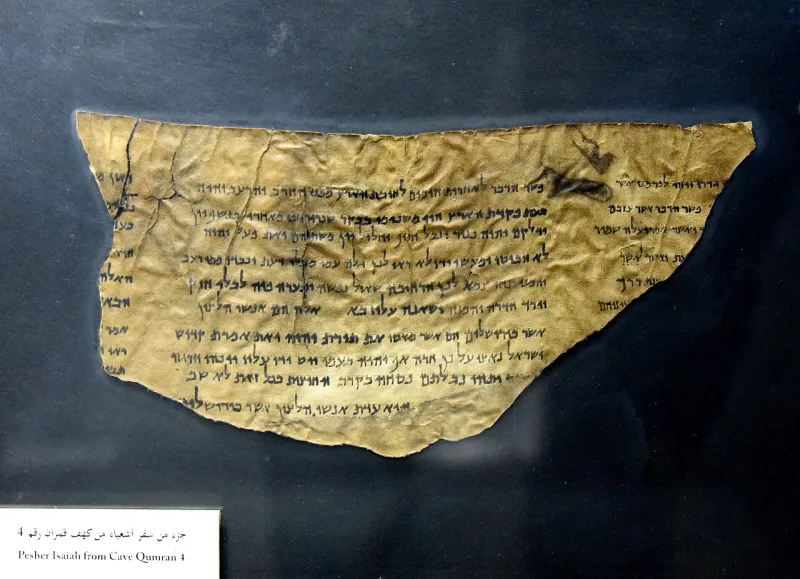
About 21 chapters of Isaiah sit inside the Book of Mormon. They are in 1 Nephi 20-21, 2 Nephi 7-8, 2 Nephi 12-24, 2 Nephi 27, Mosiah 14 and 3 Nephi 22.
The wording is almost identical to the King James Version.
Why that is strange
The King James Version is an English translation from 1611. Lehi left Jerusalem around 600 BC.
A fresh translation from his brass plates should not match one later English edition word for word.
The detail that sharpens it
Royal Skousen is the leading Latter-day Saint scholar of the text. His critical work found the quotations match later King James printings.
Not even the 1611 original. And where the Book of Mormon does differ, the changes rarely give a better Hebrew reading.
Their answer, at full strength
FAIR and Skousen say the translation was never word for word. Where the plates matched the Bible, the familiar King James wording was supplied.
Either Joseph consulted a Bible, or revelation gave him King James style English. Skousen adds that some variants look like older English streams rather than copying.
How strong is this argument?
Strong for you. Their own leading textual scholar concedes where the English came from.
The answer explains the dependence. It does not deny it.
What to say
"Why does it track a later King James printing rather than the Hebrew?"

How they answer this — at its strongest
The King James wording came with the translation, not from the plates themselves.
FAIR and Skousen agree the translation was never word for word. Where the plates matched the Bible, the familiar King James wording was given. Two reasons are offered. Joseph may have consulted a Bible. Or, in Skousen's tight-control model, revelation supplied him with King James style English.
On that reading the King James wording is a feature of how the book was given. It is not evidence against an old source. Skousen goes further. He argues that some Isaiah variants come from Early Modern English streams of text. They are not copied from the 1611 page at all.
The verdict
Strong for you: their own leading textual scholar grants where the English came from.
Their own leading textual scholar grants the core fact. The English text comes from the King James Bible. It even carries printing habits added after 1611. Skousen does not dispute that.
So the replies explain the dependence. They do not rebut it.
Sources
- David P. Wright, 'Isaiah in the Book of Mormon: Or Joseph Smith in Isaiah' (American Apocrypha, Signature Books, 2002)
- Royal Skousen, The History of the Text of the Book of Mormon, Part 5: The King James Quotations (2019), summarized at BYU Studies
- LDS Discussions, 'The King James Bible and the Book of Mormon'