Zelph, the 'white Lamanite' in an Illinois mound
ContestedLDS scholars have a real answer here. Say so before your friend does.
The evidence
What happened
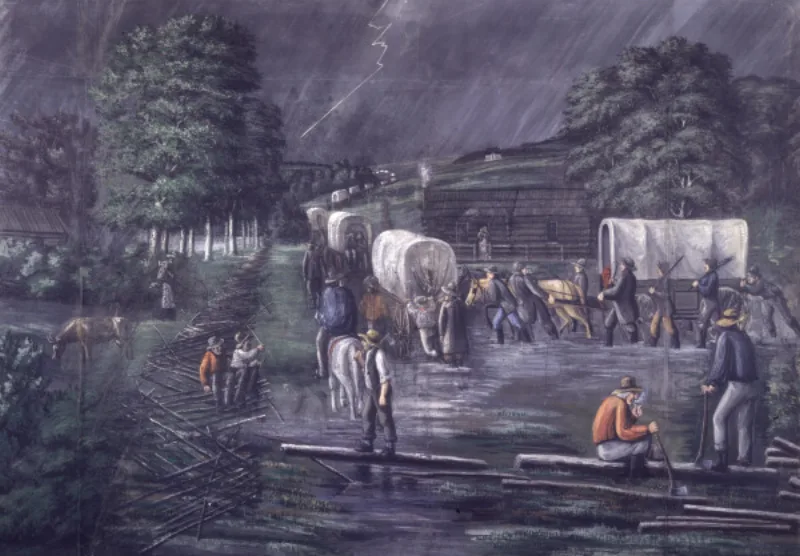
On 3 June 1834, during Zion's Camp, Joseph Smith's men dug into a burial mound near the Illinois River. They found a skeleton with an arrowhead between its ribs.
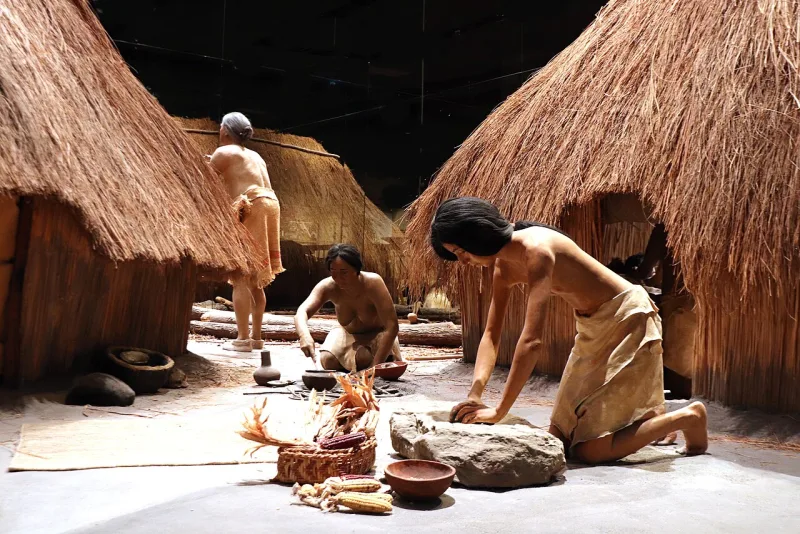
The site is Naples-Russell Mound 8, in Pike County, Illinois. It is a Hopewell burial.
What Joseph said
That by vision the bones belonged to "Zelph," a white Lamanite warrior-chief who served under "the great prophet Onandagus." He had been killed in battle. Several accounts add that Onandagus was known from the Rocky Mountains to the eastern sea.
Who wrote it down
At least six men who were there. Wilford Woodruff.
Heber C. Kimball.
George A. Smith.
Levi Hancock. Moses Martin.
Reuben McBride. The story entered History of the Church 2:79-80.
Their answer, at full strength
FAIR draws on Kenneth Godfrey's source study. Joseph wrote nothing about Zelph himself.
The six diaries disagree on details — which battle it was, and whether the Rocky Mountains line was original. The version in History of the Church is a later scribal blend that turned a campfire remark into formal revelation.
And even at face value, apologists say Zelph could be a late Lamanite far from the core lands, so it fixes nothing about geography.
How strong is this argument?
Genuinely arguable on the details. The accounts do differ, and the printed version is a conflation.
But all six diaries agree on the core. Joseph claimed a vision naming a specific skeleton as a white Lamanite under a prophet called Onandagus.
Either that is a false revelatory claim about a Hopewell burial, or it has to be downgraded to speculation.
What to say
"Six men wrote down the Zelph story that week. What do you do with it?"
How they answer this — at its strongest
Joseph wrote nothing, the diaries disagree, and the printed version is a later blend.
FAIR, drawing on Kenneth Godfrey's source study, notes that Joseph himself wrote nothing about Zelph.
The six diary accounts disagree on key details. Which battle it was. Whether the Rocky Mountains phrase was original.
The History of the Church version is a later scribal blend that hardened a casual campfire comment into formal revelation.
And even taken at face value, apologists argue that Zelph could be a late-period Lamanite in the hinterlands, far from the Book of Mormon's core lands. So the story does not fix Book of Mormon geography.
The verdict
Arguable on details, but all six diaries agree on the core claim.
The objections about sources are real. The accounts do differ on details, and the printed version is a blend. So the exact wording of Joseph's statement cannot be recovered. That keeps this out of unrefuted.
But all six diaries agree on the core. Joseph claimed a vision naming a specific skeleton as a white Lamanite under a prophet called Onandagus.
That core is either a false claim of revelation about a Hopewell burial, or it must be watered down to guesswork. That is the same untestable move seen elsewhere.
Contested on the details. Damaging on the pattern.
Sources
- Kenneth Godfrey, 'The Zelph Story' (BYU Studies)
- Wikipedia: Zelph
- MormonThink: Zelph, ancient Mormon warrior
- FAIR: Joseph Smith and Zelph