'Reformed Egyptian', a script no Egyptologist knows
UnrefutedNo good counter-argument has been published by LDS scholars.
The evidence
What the book claims
A thousand years of continuous writing. Hebrew, and a modified Egyptian script, cut into metal plates and stone.
See Mormon 9:32-34, 1 Nephi 1:2, Omni 1:20-22, Mosiah 8:11-13 and Jacob 4:1-3.
What has been found
Nothing. No writing in Hebrew or Egyptian has ever been dug up in the Americas and proved real.
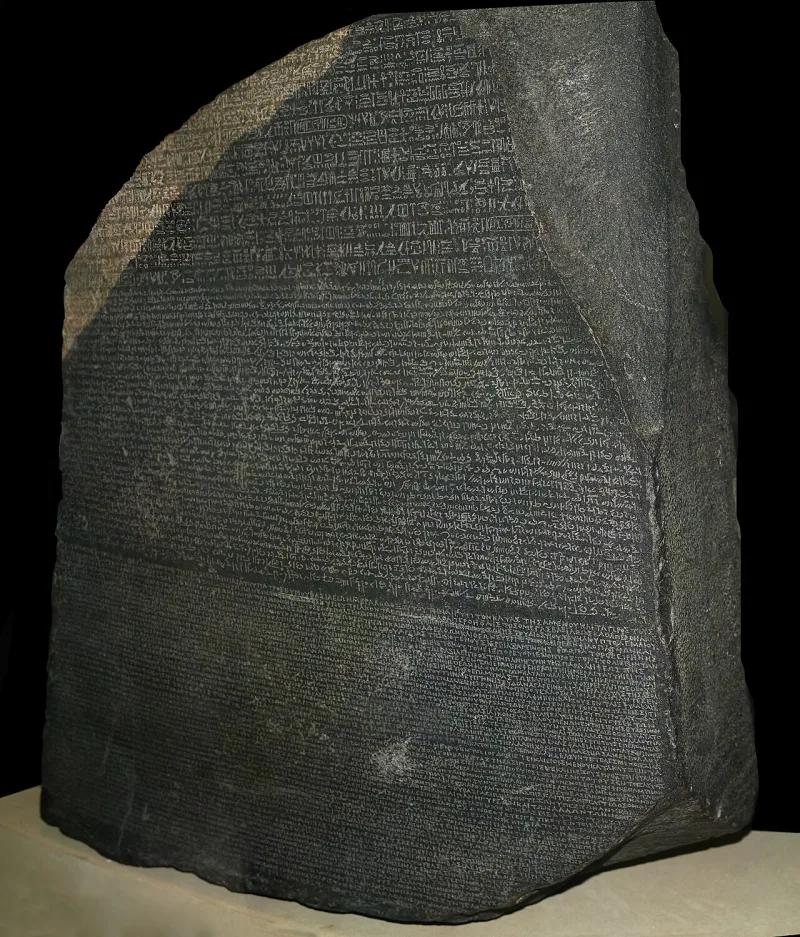
Nor in any related script. No script called "reformed Egyptian" is known to Egyptologists.
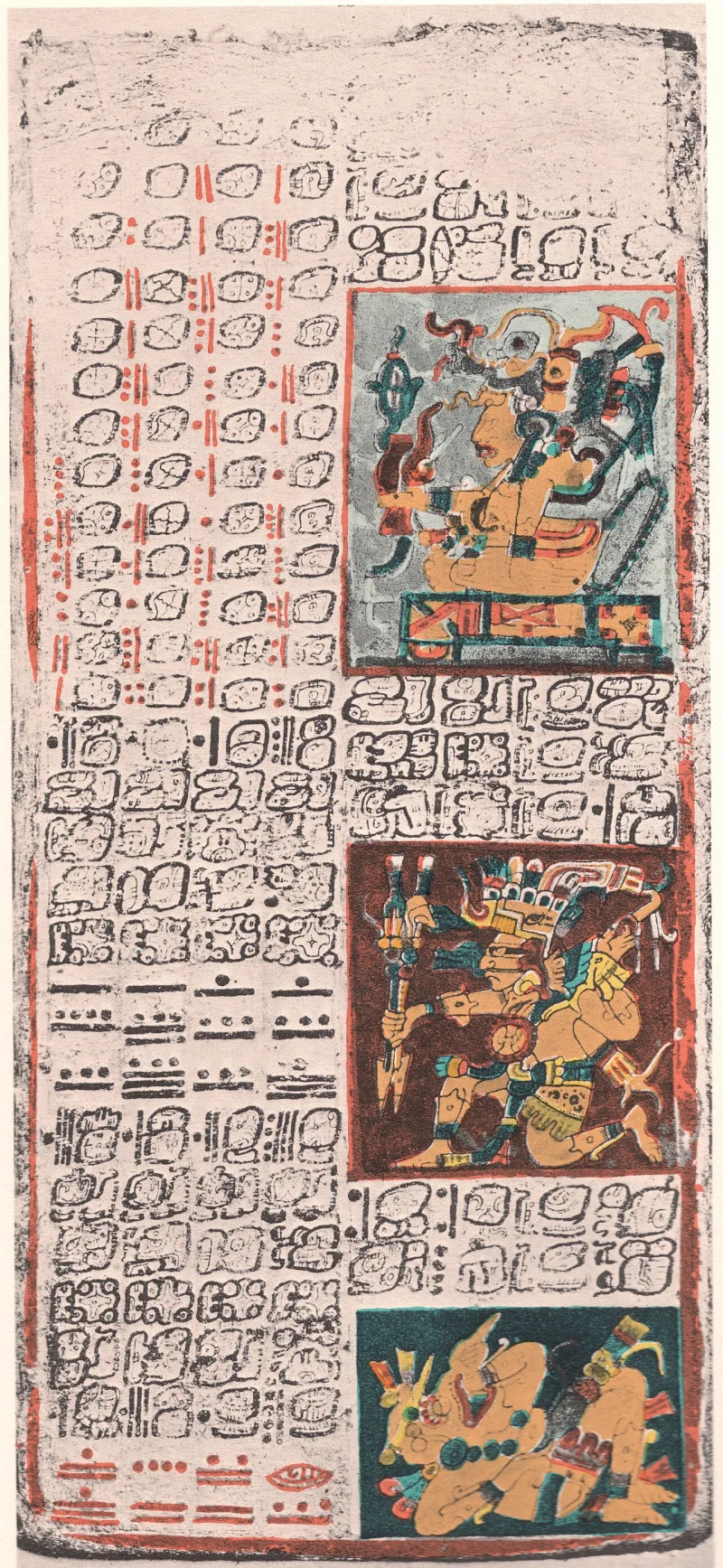
And the scripts we can read there — Maya, Zapotec, Epi-Olmec — are built on other lines. The signs are not the same.
The claimed exceptions
Four objects come up. The Bat Creek Stone.
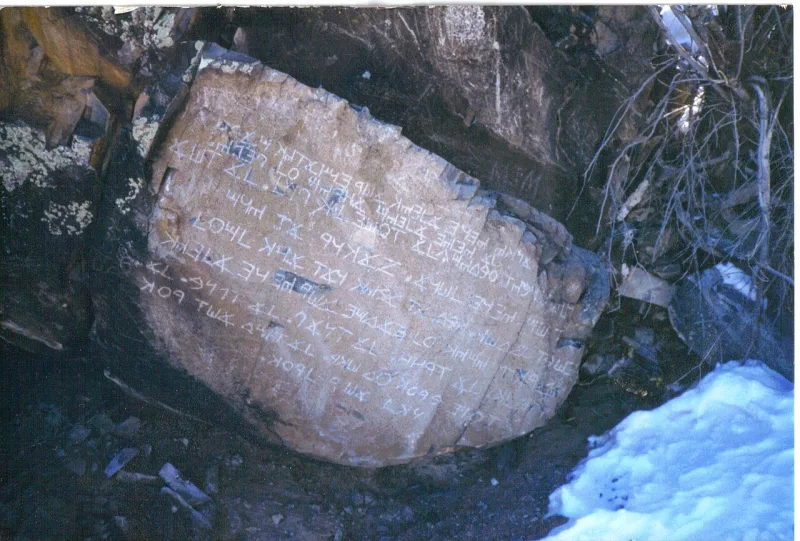
The Los Lunas Decalogue Stone. The Newark Holy Stones.
The Michigan Relics. Each one is a known fake, or is strongly suspected of being one.
Do not lean on any of them.
Their answer, at full strength
Three lines. First, "reformed Egyptian" is the book's own phrase for a script "altered by us, according to our manner of speech." It is not a claim that Egyptologists should know the name.
Egyptian really was reformed over time. It went from hieroglyphic to hieratic to demotic.
And Hugh Nibley noted Semitic languages written in Egyptian letters. Second, this was a small record.
A few men kept it on plates, and then it was buried. It was never public writing on walls.
Third, Brian Stubbs works on Uto-Aztecan. He argues for about 1,500 matches with Semitic and Egyptian, and claims regular sound rules.
How strong is this argument?
Strong for you. The small-record answer hangs together.
But notice what it grants: there is now no way to test the claim. Stubbs is the one piece of evidence on the other side.
No linguist outside the church has taken it up. Michael Coe, the Yale Maya scholar, said the field has found nothing.
What to say
"Has any inscription in the Americas ever been read as Hebrew or Egyptian?"
How they answer this — at its strongest
Reformed Egyptian is the book's own phrase, and Stubbs claims 1,500 matches in Uto-Aztecan.
Three replies. First, 'reformed Egyptian' is the text's own phrase for its script, 'altered by us, according to our manner of speech', at Mormon 9:32. It is not a claim that Egyptologists should know the name. Egyptian really was reformed over time, from hieroglyphic to hieratic to demotic. Hugh Nibley noted real cases of Semitic languages written in Egyptian characters.
Second, the record was a small elite tradition on metal plates. A few men kept it, and then it was buried. It was never public monument writing, so we would not expect to find it.
Third, Brian Stubbs, a specialist in Uto-Aztecan, argues for about 1,500 proposed Semitic and Egyptian matches. He claims regular sound correspondences. That is the kind of evidence historical linguistics accepts.
The verdict
Strong for you: the small-record answer works, but it grants the claim cannot be tested.
The small-corpus argument hangs together. It also grants that the claim cannot be tested.
Stubbs's work is the only positive evidence offered. No historical linguist outside the church has accepted it or engaged it seriously. The standard criticism is that his method searches a large word list for sound resemblances. Given enough candidates, that can turn up matches between unrelated families.
Meanwhile the null result stands. A whole field of decipherment has found no Afro-Asiatic link in any Mesoamerican script. Michael Coe of Yale has said so.
Sources
- Michael D. Coe (Yale Mayanist), Mormon Stories interview (2011)
- Survey of the scholarly position and forgery history of claimed exceptions ('Reformed Egyptian')
- Criticism of the Book of Mormon (survey with primary citations)