Mayor Joseph Smith ordered a newspaper's press destroyed
AdmittedTheir own church publications admit these facts. You can make this point from LDS sources alone.
The evidence
What happened on 10 June 1844
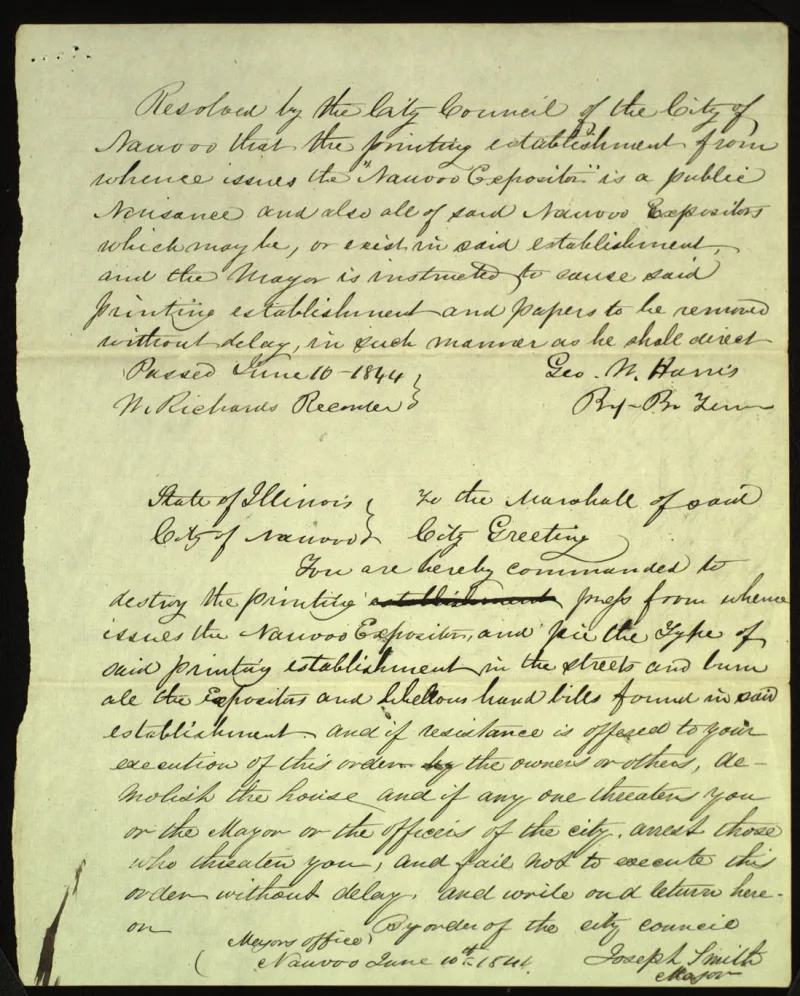
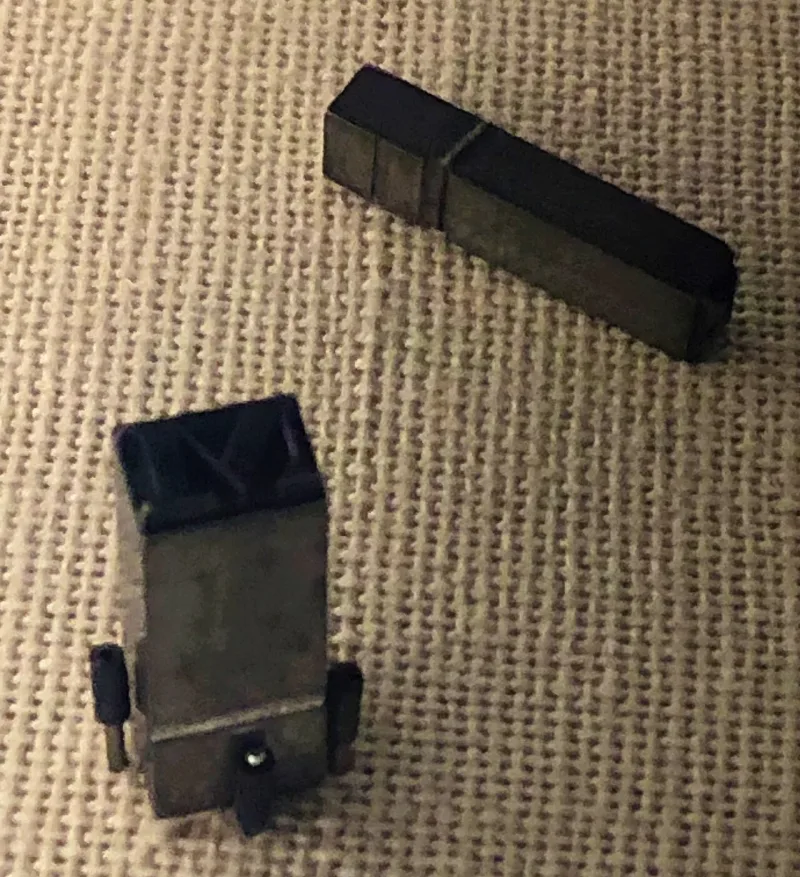
Joseph Smith was mayor of Nauvoo. He and the city council ordered the press of the Nauvoo Expositor destroyed.
The paper had printed one issue, on 7 June. It reported his secret plural marriage.
It reported his teaching that there is more than one god. On both counts it was telling the truth.
What followed
Riot charges. Smith's surrender at Carthage.
And the mob attack of 27 June in which he and Hyrum were killed.
The detail devotional accounts leave out
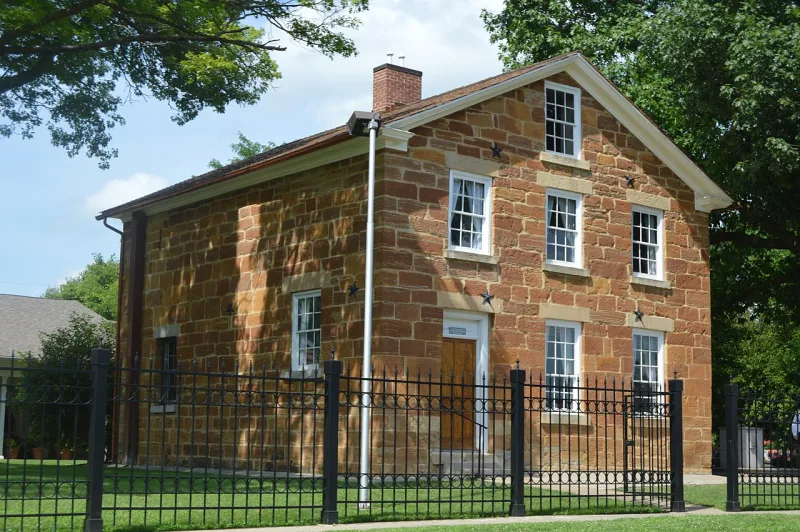
At Carthage, Smith fired a smuggled six-shot pepperbox pistol into the mob. He wounded three men.
That is John Taylor's own account, in History of the Church 7:102-103. Devotional retellings left it out for a long time.
Their answer, at full strength
Dallin H. Oaks published a legal analysis in the Utah Law Review in 1965.
Before the Fourteenth Amendment, the First Amendment did not bind city governments. So abating a newspaper as a nuisance had some legal footing under the Nauvoo Charter.
Oaks concedes that destroying the press itself probably went beyond that. The council feared the paper would bring a mob — and it did.
On Carthage: defending yourself against a lynch mob does not make the killing just. Smith was in state custody under the governor's pledged protection.
The pistol is recorded by an eyewitness, and the church has published the fact in Saints.
How strong is this argument?
They admit the facts, and so should you. Both things are true at once.
The killing at Carthage was extrajudicial murder. And the trigger for it was the suppression of a newspaper that was telling the truth.
Do not use the pistol to sneer; use it to ask what the word martyr is doing.
What to say
"Was anything in the Expositor untrue?"
How they answer this — at its strongest
Oaks argues the city had legal footing, and Carthage was still an unjust killing.
Dallin H. Oaks published a legal analysis in the Utah Law Review in 1965. Before the Fourteenth Amendment, the First Amendment did not bind city governments. So abating the newspaper as a nuisance had some legal footing under the Nauvoo Charter. Oaks concedes that destroying the press itself likely went beyond that.
The council feared the paper would bring a mob down on the city. The mob came anyway.
On Carthage, defending yourself against a lynch mob with painted faces does not make an unjust killing just. Smith was in state custody under the governor's pledged protection. The pistol is recorded by the eyewitness John Taylor himself, and the church has published the fact, including in Saints.
Martyrdom in the broad sense means being killed for your religion, not dying passively.
The verdict
They admit the facts: both are true, murder at Carthage and a paper telling the truth.
Every element is documented in the Joseph Smith Papers, in History of the Church, and in the church's own topic essays. The accuracy of the Expositor's reporting. The mayor-ordered destruction on 10 June 1844. And the pepperbox at Carthage.
Apologetics contests the framing, martyr against man in a gunfight, and softens the legal question.
But the killing on 27 June was plainly murder outside the law. And the suppression of a truthful press was what set it off. Both things are true. Neither is refuted.
Sources
- LDS Church History Topics: Nauvoo Expositor
- Joseph Smith Papers: Order to Destroy Nauvoo Expositor Press
- FAIR: Joseph Smith fired a gun at Carthage Jail