Jacob bans polygamy; D&C 132 commands it
ContestedLDS scholars have a real answer here. Say so before your friend does.
The evidence
What the Book of Mormon says
Jacob 2:24 says David's and Solomon's many wives were "abominable before me, saith the Lord." Verse 27 commands: "there shall not any man among you have save it be one wife; and concubines he shall have none."
What D&C 132 says
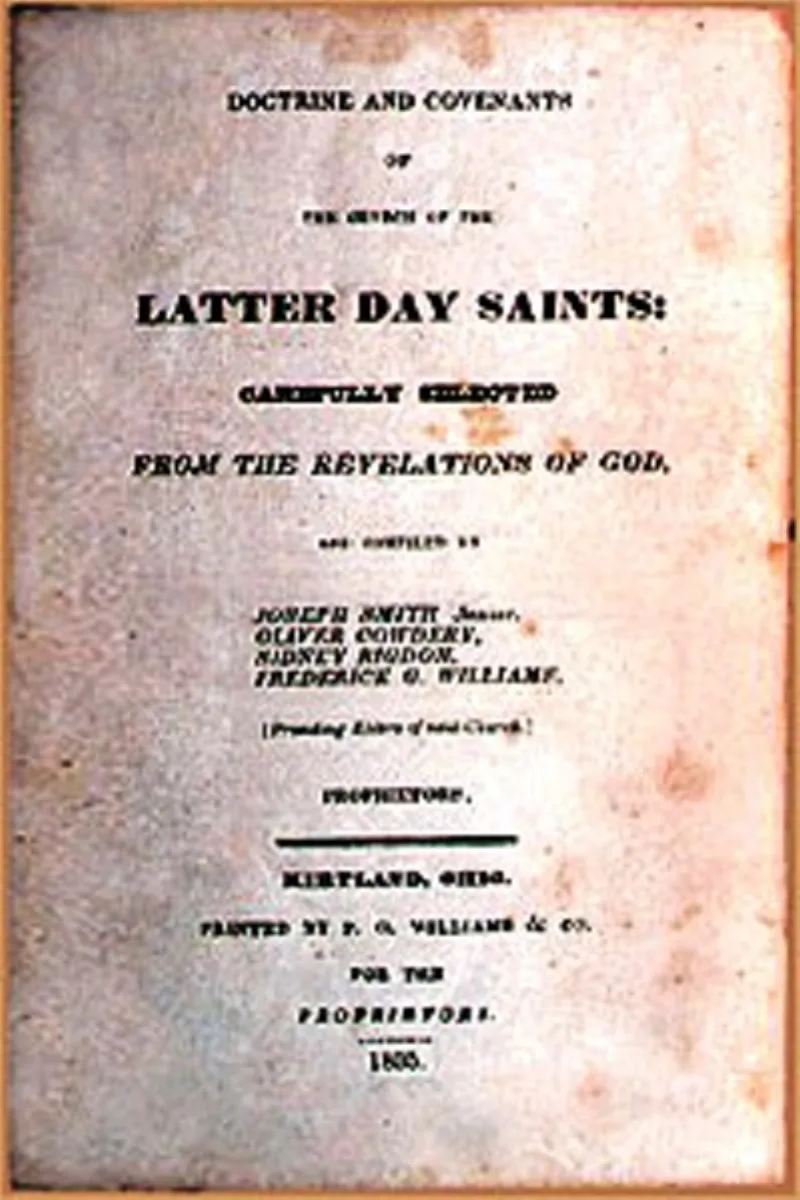
That David's wives and concubines "were given unto him of me." The same practice, from the same God, with the opposite verdict.
Their answer, at full strength
FAIR points to Jacob 2:30, which they read as an exception clause: monogamy is the rule, unless God commands otherwise to raise up seed. That reading is available in the text.
Why this case is unusual
Here the Bible and the Book of Mormon agree with each other, and D&C 132 stands alone against both. That is worth pointing out gently.
What to say
"Your own scripture calls it abominable. What changed?"
How they answer this — at its strongest
Jacob 2:30 is an exception clause, and 2 Samuel 12:8 says God gave David those wives.
FAIR reads Jacob 2:30 as an exception clause. Monogamy is the rule. But 'if I will, saith the Lord of Hosts, raise up seed unto me, I will command my people.' On that reading D&C 132 is the commanded exception, and the two texts state one policy.
On David and Solomon they draw a line. Jacob condemns the excess that was never authorised, the Bathsheba affair and the foreign wives who brought their idols. D&C 132:38-39 says David sinned only in the case of Uriah.
So the wives 'given of me' were the authorised ones. And 2 Samuel 12:8 does have Nathan say God gave David his master's wives.
The verdict
It is narrowed, not removed, and the strain shows the moment you reach Solomon.
The harmony is available in the text. 2 Samuel 12:8 really does say that. And Jacob 2:30 can be read as an exception, though some scholars, Latter-day Saints among them, argue its grammar means the opposite.
The strain shows at Solomon. No text anywhere authorises Solomon's wives. Jacob condemns them and so does 1 Kings 11. Yet D&C 132:38 lists Solomon among those who sinned not.
The rule-plus-exception reading keeps the texts formally consistent. The price is that an 'abominable' practice becomes something God can grant. Narrowed, not removed.
Sources
- 'The Scriptures vs. D&C Section 132' (aggregating the standard critical case)
- Richard Packham, 'Major Contradictions in Mormonism'
- Mormonr, 'Doctrine and Covenants 132 and Polygamy' (documents both sides)