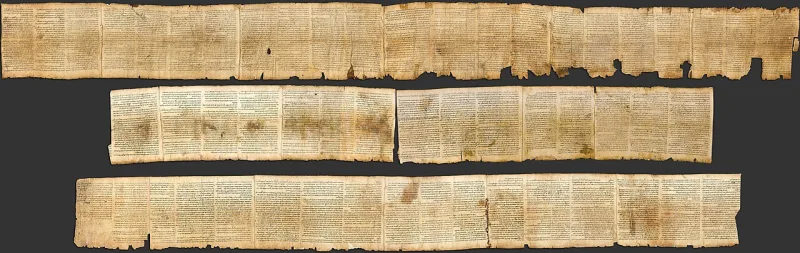
Isaiah 53, in a scroll dated 125 BC
ConcededSkeptical scholars grant this themselves. Argue it from their sources, not yours.
The evidence
Strip it to what is physically certain
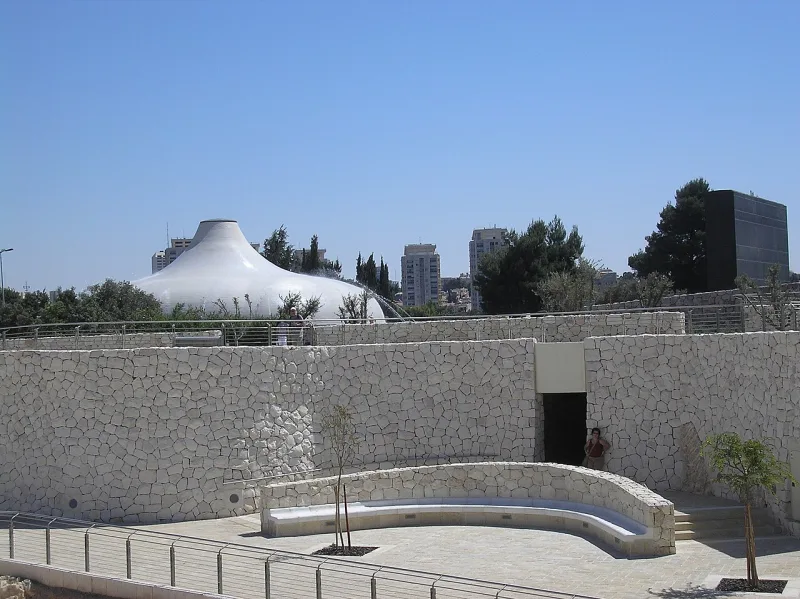
The Great Isaiah Scroll contains all of Isaiah 53. It sits in the Israel Museum and dates to roughly 125 BC.
That is more than a century before the crucifixion. Psalm 22 was put into Greek generations before Jesus as well.
What those texts say
Isaiah 53 has a servant who is despised. He is pierced for the wrongs of others.
He is silent before his shearers, numbered with criminals, buried with the rich. Then he sees light after death.
Psalm 22 has mockery, "why have you forsaken me," garments divided, lots cast, and hands and feet encircled.
The one thing this settles
One idea is dead on arrival. Christians did not write or edit these texts afterwards to fit Jesus.
The match is either coincidence, or Gospel writers shaping their story to the texts, or design. But the texts came first.
That is not a faith claim. It is carbon-dated parchment.
Their answer, at full strength
The mainstream Jewish and critical reading is that Isaiah's servant is Israel. Isaiah says so nearby: "you are my servant, Israel" (Isaiah 41:8, 44:1, 49:3).
Chapter 53 is exile and return, not prediction. Psalm 22 is an individual lament, a standard genre piece.
And the match has a simpler cause. The passion stories were composed using these texts.
Mark hands Jesus the psalm's first line from the cross. So the texts shaped the telling.
Also, the word "pierced" in Psalm 22:16 rests on a real dispute, between the Masoretic "like a lion" and the ka'aru reading.
How strong is this argument?
Granted, but only for the dating, which is the actual claim. Anyone with a radiocarbon lab grants it.
The messianic reading is genuinely contested, so keep the two layers apart. This is the answer to "the prophecies were written in afterwards." Full stop.
Against the servant-as-Israel reading, note that the servant suffers for "my people." Hang nothing at all on Psalm 22:16.
What to say
"You can see the scroll online. It's from 125 BC.
Nobody added Isaiah 53 after the fact."

How they answer this — at its strongest
The servant is Israel, and the passion story was told in the psalm's own words.
The mainstream Jewish and critical reading is that Isaiah's servant is Israel. The text says so in the chapters around it — 'you are my servant, Israel' at Isaiah 41:8, 44:1 and 49:3 — suffering in exile and vindicated in the return. On that reading, chapter 53 is not a messianic prediction in context. Psalm 22 is an individual lament, a genre piece rather than a prophecy.
And the match has a simpler explanation. The passion narratives were composed using these texts. The evangelists, writing decades later, told the crucifixion in the language of Psalm 22, and Mark hands you the psalm's first line from the cross. So of course the events fit the texts. The texts shaped the telling.
Psalm 22:16's 'pierced' also rests on a real textual crux, the Masoretic 'like a lion' against the ka'aru reading, and is too disputed to bear weight.
The verdict
Conceded for the date only: no one added Isaiah 53 after the fact.
Conceded — strictly for the pre-dating, which is the entry's actual claim, and which anyone with a radiocarbon lab grants. The messianic reading is genuinely contested, and the two layers must be kept apart.
This is the answer to 'the prophecies were written in after the fact', full stop. Against the servant-as-Israel reading, note honestly that the servant in chapter 53 suffers for 'my people', and that some pre-Christian Jewish tradition read the passage messianically. Then let the texts do their own work. Hang nothing on Psalm 22:16's disputed word.
Sources
- Great Isaiah Scroll, Israel Museum (view Isaiah 53 online)
- Wikipedia, 'Isaiah 53' (Jewish and Christian interpretation history)
- Psalm 22 (text)
- Wikipedia, 'Psalm 22' (incl. the 22:16 textual question)